
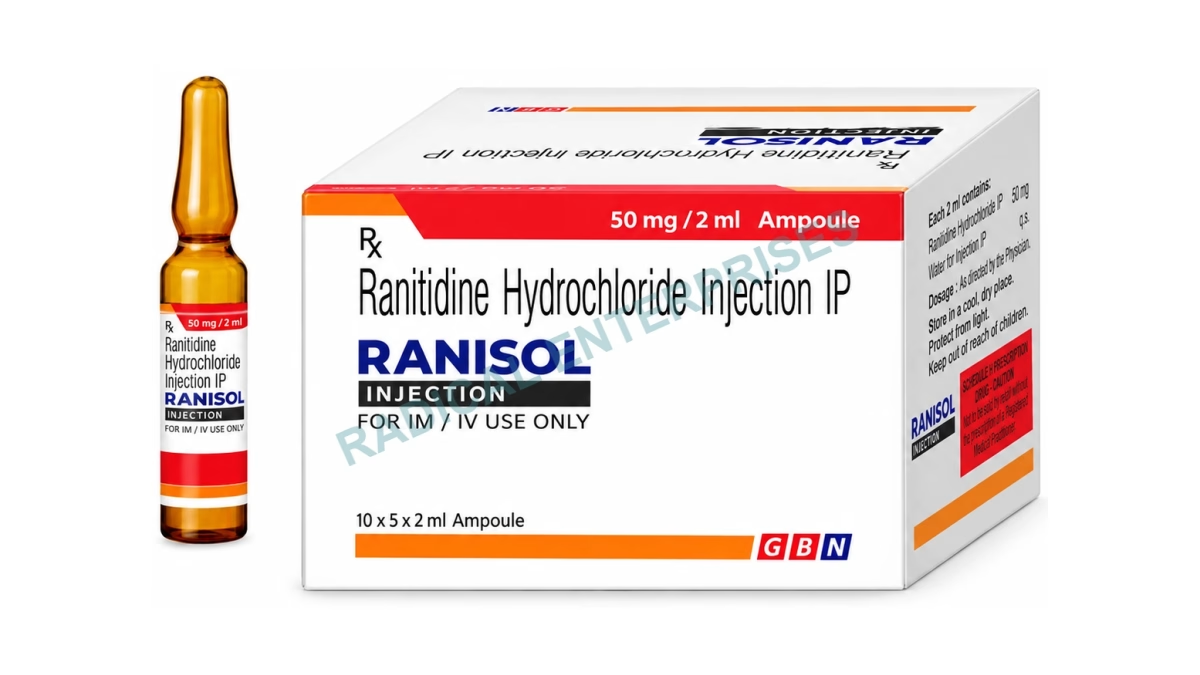
 Ranitidine 50mg/2mL Injection
$84.00
Ranitidine 50mg/2mL is an injectable H2-receptor blocker used in hospital care for acid-related ulcer disease and excessive stomach-acid production when oral treatment cannot be taken.
A healthcare professional gives ranitidine by intramuscular injection or by diluted, slow intravenous administration. It must not be given as a rapid, undiluted intravenous push. Kidney function influences the amount and interval between doses.
Ranitidine blocks histamine H2 receptors on acid-producing stomach cells. This reduces basal and stimulated gastric acid secretion.
Headache, dizziness, diarrhoea, constipation or injection-site discomfort can occur. Rare serious reactions include allergy, liver injury and abnormal heart rhythm, particularly with inappropriate intravenous administration.
Tell the treating team about kidney disease, acute porphyria, previous acid-suppressant allergy, pregnancy or breastfeeding. Kidney impairment can increase exposure. Report swallowing difficulty, unexplained weight loss, recurrent vomiting or signs of gastrointestinal bleeding even if acid-related pain improves.
Provides a non-oral acid-suppression option during periods when swallowing or enteral treatment is not feasible.
No. The listed ampoule contains 50mg in 2mL, equivalent to 25mg/mL. Dilution for intravenous use changes the concentration administered.
Rapid intravenous administration can cause a slow or abnormal heartbeat, dizziness or a fall in blood pressure. Dilution and controlled administration reduce avoidable injection-related risk.
It is not a routine self-treatment for occasional heartburn. A clinician should choose an appropriate oral treatment and investigate persistent symptoms.
They suppress acid differently. Ranitidine is an H2 blocker, whereas pantoprazole is a proton pump inhibitor. Their doses and schedules are not interchangeable.
No. Symptom improvement can occur even when a more serious cause is present. Weight loss, swallowing difficulty or recurrent vomiting still needs investigation.
Historical ranitidine labeling advises avoiding it in people with a history of acute porphyria because attacks have been reported.
The hospital team can reassess the need for parenteral treatment and select a suitable oral medicine when that route becomes possible.
No. Bleeding can have many causes and may need endoscopy, transfusion or other emergency care. Acid suppression alone is not a complete bleeding treatment.
H2 receptor: a histamine receptor that stimulates stomach-acid secretion. Reflux: backward flow of stomach contents into the oesophagus. Hypersecretion: excessive acid production. Renal clearance: removal of a medicine through the kidneys.; AR: Ranitidine 50mg/2mL حقن; FR: Ranitidine 50mg/2mL injection; PT: Ranitidine 50mg/2mL injeção; ES: Ranitidine 50mg/2mL inyección; RU: Ranitidine 50mg/2mL инъекция; ID: Ranitidine 50mg/2mL injeksi; VI: Ranitidine 50mg/2mL thuốc tiêm; MS: Ranitidine 50mg/2mL suntikan; TL: Ranitidine 50mg/2mL iniksyon; ZH-SG: Ranitidine 50mg/2mL 注射剂
International B2B Enquiry
Send a structured B2B enquiry for Ranitidine 50mg/2mL Injection under Digestive Care. Global Medicines Export helps international buyers review product information, pack details, quantity requirements, destination-market needs, quotation support and export documentation coordination from India.
Product name, required strength or pack, expected quantity, destination country, buyer type and preferred manufacturer if any.
Availability, quotation support, documentation expectations and shipment-ready order communication can be reviewed before confirmation.
Commercial invoice, packing information, manufacturer details, batch details and supporting documents where applicable and available.
Product availability, quotation, and documentation support are coordinated for international B2B enquiries.
Ranitidine 50mg/2mL Injection